
By RORY MOORE
Tiger Media Network
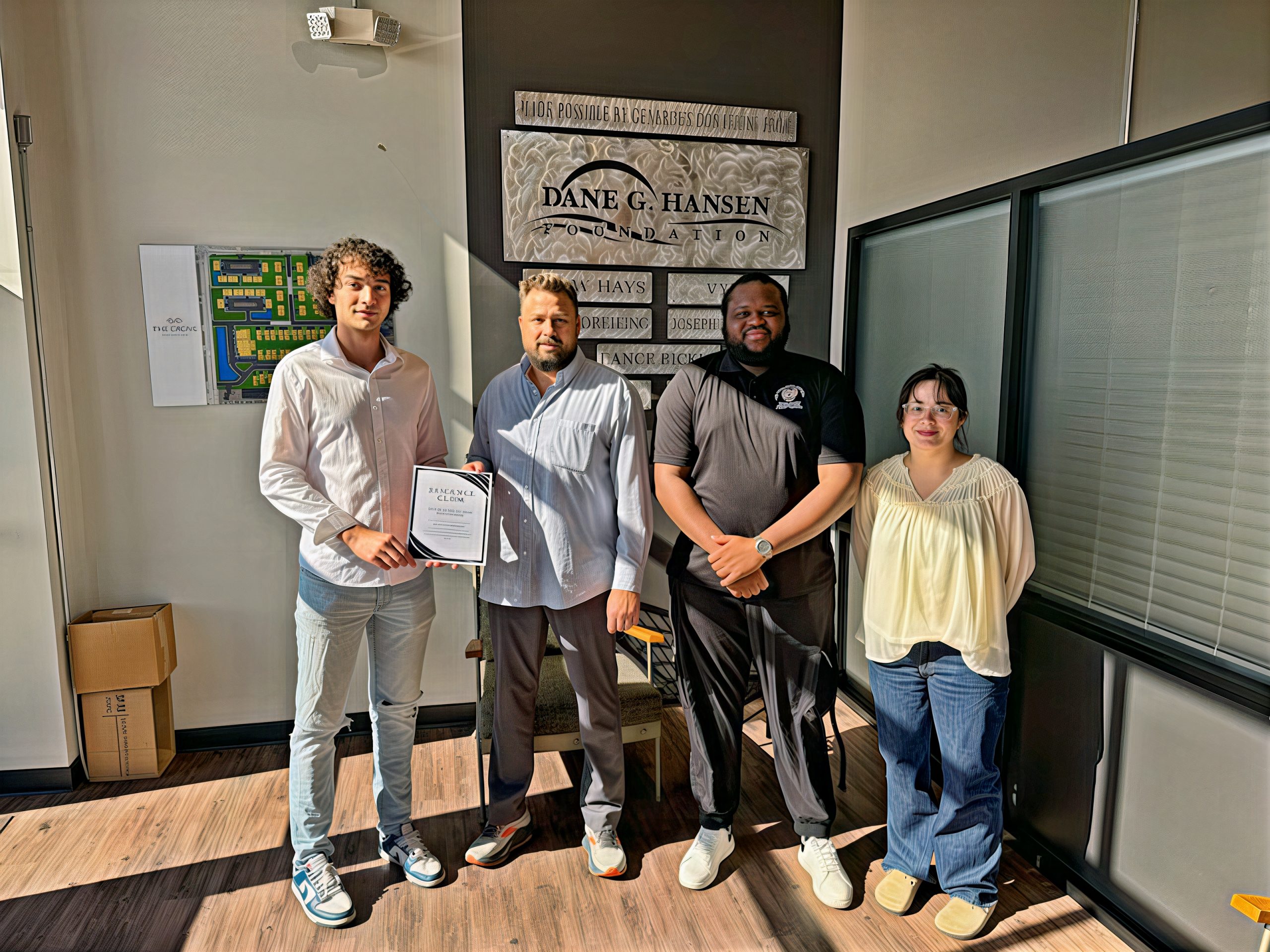
Photo courtesy of Mohamed Didi
Fort Hays State University master’s student Mohamed Didi is leading a multidisciplinary research initiative aimed at strengthening human resources and workforce capacity in rural communities across the United States. Through the Rural Human Resource Project, Didi and his teammates Fiorella Mendez Acevedo and Amadou Diawara, are developing practical tools that range from HR guidance to AI and digital technology education. Their goal is to support small businesses that operate with limited staffing and resources.
Didi and his team identified a major challenge in many rural communities: small businesses frequently manage every aspect of their operations on their own. This lack of specialized support makes hiring, HR tasks, and administrative responsibilities particularly difficult for rural entrepreneurs.
“In underserved communities in rural America, there are a lot of small business owners wearing many hats,” he said. “They’re the human resource manager, accountant, and other things. In a lot of small towns, they have issues [like that], and I created a guide to help them understand better, like human resources, how to hire and write a job offer letter, and how to make it attractive to people.”
The guide, developed collaboratively as part of the RHRP, offers accessible tools and templates to assist business owners with hiring, writing job descriptions, improving HR processes, and learning about new technologies that can support their daily operations.
Didi explains that the initiative is also informed by his academic research on unemployment and its effects on community well-being. Studies show a strong correlation between rising unemployment and negative health outcomes, highlighting the importance of stable workforce conditions in rural areas. This awareness motivated him to bring together a multidisciplinary team.
“Every time unemployment goes up, even just by 1%, an estimated 40,000 people die because of that,” he said. “So, it’s an important thing we’re trying to do, and I wanted to have a multi-disciplinary team.
Mendez Acevedo contributes expertise in marketing and communication strategies for small businesses, while Diwara introduces rural entrepreneurs to emerging digital tools, including concepts from Web3 and other future technologies. Together, the team provides a blend of HR, marketing, and technology perspectives tailored to the needs of rural communities.
“What we want to do is go to these small towns, talk with the chamber, and give them the book so they can distribute it around to businesses and help them,” he said. “We also want to talk about new technologies that are emerging because people are scared of AI since they think people are going to lose their jobs. But we want to educate them that this is a tool that can help you as a small business owner.”
The group plans to visit 40 rural towns and partner with chambers of commerce and local organizations to provide workshops, resources, and practical guidance. They aim to equip rural entrepreneurs with tools they can use immediately, from HR templates to marketing strategies and introduction to new digital tools.
“We’re international students, and we feel like we’ve learned a lot here in Hays,” Didi said. “We love small towns, and we want to give back to these communities. I’ve been to big cities but I like the peace, tranquility, and kindness of people [in small towns]. Even though we’re internationals, it’s not true about all that people say in the media; people are nice, and we want to give back to those hard-working Americans who are part of our life and community.”
Another focus is to educate rural employees about workforce opportunities, including the hiring of international students through programs such as Optional Practical Training.
“In my guide, we also explain why hiring international students can be a great opportunity for rural businesses,” Didi said. “Many employers don’t realize that after graduation, international students can work legally through programs like OPT, and they bring strong skills in areas such as HR, marketing, and technology. With the labor shortages many small towns face, this can be a real asset. Part of our goal is simply to raise awareness and help businesses understand the options available to them.”
The biggest hurdle he has faced in his endeavour is gaining credibility.
“It’s all about when you reach out to people,” he said. “They want to know who you are because they want to trust you. That’s why I’m trying to get some stories out there, to build credibility and trust, so people can look at this initiative when getting our story out there.”
Didi and Diawara also bring experience from working together on an agri-tech initiative in rural West Africa. Their work involved visiting remote farming communities, learning about challenges farmers faced, and helping them gain access to tools and resources that could improve productivity and financial stability. This experience shaped the way they approach community-based problem-solving in the Rural Project.
“Back in Senegal, Amadou and I worked on an agritech initiative that connected farmers with resources and support,” Didi said. “We spent a lot of time in rural areas, sometimes traveling for hours to meet farmers and understand their challenges directly. That experience taught us how to work closely with communities and design solutions for people who don’t always have access to formal systems. It’s a perspective we’re bringing into the Rural Project as well. We’re connecting investors to agriculture through cryptocurrency so they could invest in projects or campaigns that farmers are doing.”
That connection he establishes between farmers and investors is what he believes gives his initiative an entrepreneurial edge over other projects.
“I’ve [always] worked with Amadou in connecting farmers with investors, and we’ve worked in way more rural areas in West Africa,” Didi said. “Sometimes, we had to drive five, six hours in the middle of nowhere to check on projects farmers had, and I think that’s the edge I have, which is field experience. I also think I am at ease with talking to people, explaining to them, and presenting. The entrepreneurial side helps because we know it’s difficult to hire people; some businesses could make 10 times more money if they had the people willing to put in the work. Amadou and I started a small logistics business renting cars to international students here in Hays, and we had a problem hiring people to work. We hired three people, so we want to share what we did to overcome that problem.”
Additionally, Didi wants to help rural entrepreneurs better understand AI to address their fear of displacement by the technology and enable them to utilize the technology to reduce workload and increase efficiency.
“The way I think is, ‘How can I use it to get the best value out of it?’” he said. “It’s here to stay, so either you panic, or you try to get the most out of it, and hopefully it will help your business. There’s a lot to learn from it, and a lot to be helped out of it. I work with it, it’s not something I want to be dependent on, but it’s something that can help you achieve your goals. Even simple AI tools can save time, streamline tasks, and help businesses operate more efficiently. That’s what I will put to people, we have to be scared of it since it will be crazier in the future, but you have to embrace it a bit.