
By MALEAH GRIFFIN
Tiger Media Network
What is a Grassroots Movement? The Oxford Review defines it as a collective action driven by ordinary people, often at the local level, to create social or political change. But what makes a movement?
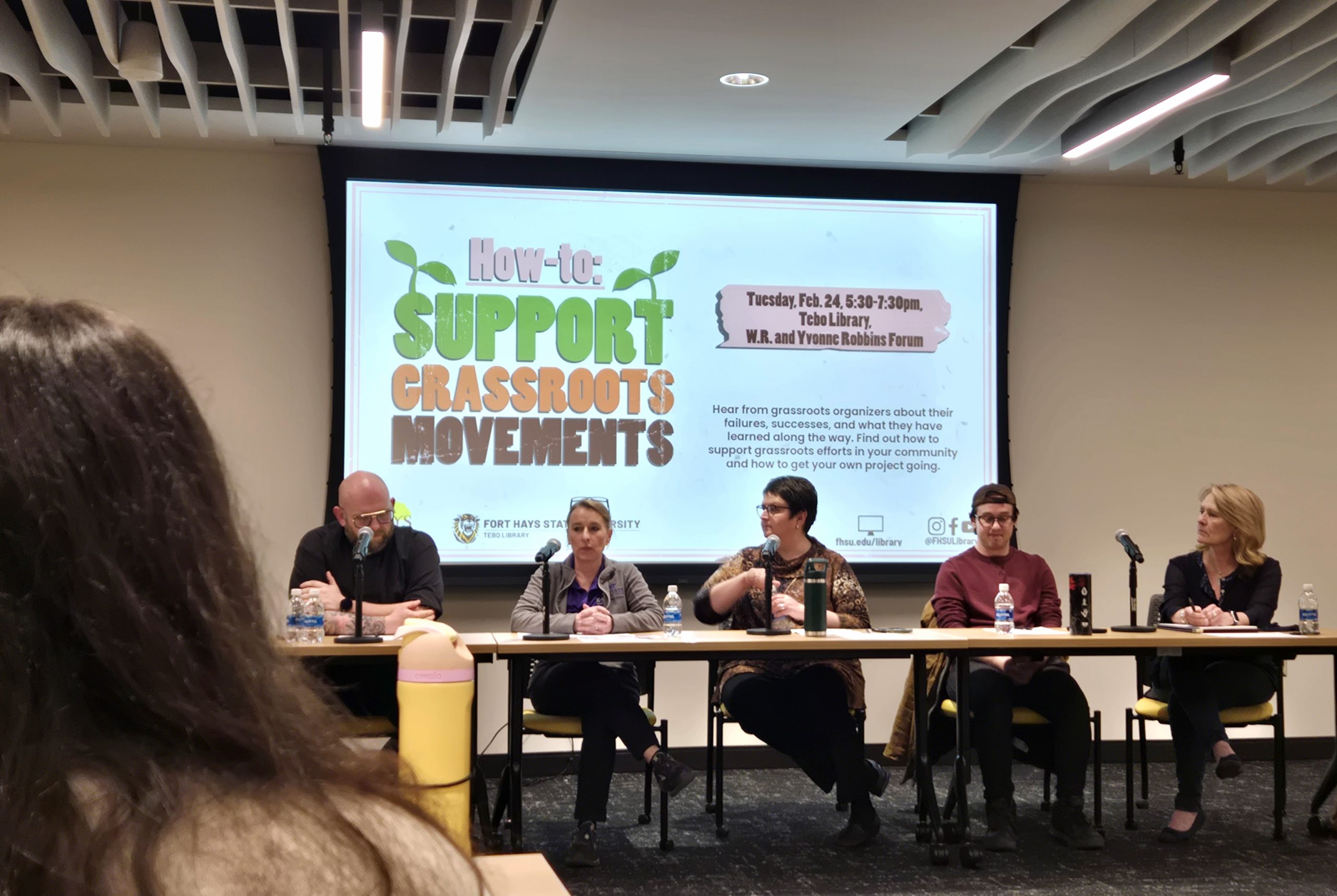
A panel of grassroots organizers broke it down last Tuesday night in Tebo Library’s W.R. and Yvonne Robbins Forum. Ben Houchen, director of Feeding Hays, Monique Koerner, with K-State Extension, Dana Stanton with Northwest Economic Innovation Center, Kiernan McCarty, Hays Arts Council executive assistant, and Brenda Meder, director of School Programming, spoke to attendees.
According to the panel, Grassroots Movements need only an initial idea or conversation to get started, but require many elements to grow into something impactful and become successful.
It takes like-minded individuals who see and understand a collective need. You need a group of people who share the same belief and can build trust, because not everything will always be exciting and achievable.
This leads into the next element: overcoming challenges. Just because there is passion and progress, it doesn’t mean everything will fall into place. According to the panel, when facing these challenges, you must remain true to your goals and focus on what you want to accomplish. This ties into volunteers or members in a coalition. Pick people who want to be a part of these goals for the right reasons, coming from a position of selflessness and giving.
Amongst these actions, willingness to collaborate and share success is really impactful. Keeping to yourself or being closed-mindedness only creates limitations for yourself and others.
“Not being territorial about your success and being willing to share is so important,” Stanton said.
Another essential part of making a change is outreaching; getting funding, support, or involvement from a local school district, businesses, community foundations, the city government, and someone in connection to the specialty area you are making a change in.
Lastly, you must be able to adapt and overcome. The path forward may not be the one you hoped for, but if it’s still taking you to your specific goal, adjust and keep progressing towards that collective achievement.
The panel gave specific examples of these key actions within their non-profits, as well as an overview of what they have accomplished and what they are working to accomplish.
Feeding Hays is a Hot Food Service provided every Thursday night in the form of a drive-through. Houchen and his friends sat together one night and decided they wanted to find a way to make an impact on the community. The group of like-minded friends saw the greatest need for housing and food, and chose to tackle the one they realistically could.
Stanton explained that it isn’t about being lazy when choosing how to impact something; rather, it’s about ensuring success and accomplishing something feasible rather than nothing at all.
“Try for the biggest impact with the least amount of work and effort to get going,” Stanton said.
When Feeding Hays initially started, they’d serve 5-15 meals a night. A week prior to the meeting, they served 250 meals. Feeding Hays has goals to expand to more nights a week and to additional locations and more churches, while being careful to maintain their core values and stay true to their mission.
The organization is at a point now where they are just trying to help people get through their days, but they are working towards finding ways to improve the quality of people’s lives for good.
“We are currently helping people to survive and working to move forward to helping people thrive,” Houchen said.
They said their goal would be accomplished through a sort of Job Fair that has the potential to include organizations coming in looking for employees, health checks needed for some of these jobs, child care, and communication with other community partners to provide a ‘one-stop shop’ to kick off the opportunity for individuals and families to thrive.
This is just one of the many members of organizations that shared at this event, but each grassroots organization shared interchangeable advice, similar start-up stories, and like challenges.
The panel said if you are ever to start, join, or support a grassroots organization, stay true to the goal and take advantage of any pathway, big or small that helps lead you to that goal.