
By LIZZY CISNEROS
Tiger Media Network
On Thursday last week, the Hispanic American Leadership Organization (HALO) at Fort Hays State University hosted an event to celebrate Día de los Muertos in the Fischli-Wills Center. The gathering offered snacks to enjoy while socializing and interacting with one another — but most importantly, it was a meaningful opportunity to honor loved ones who had passed away.


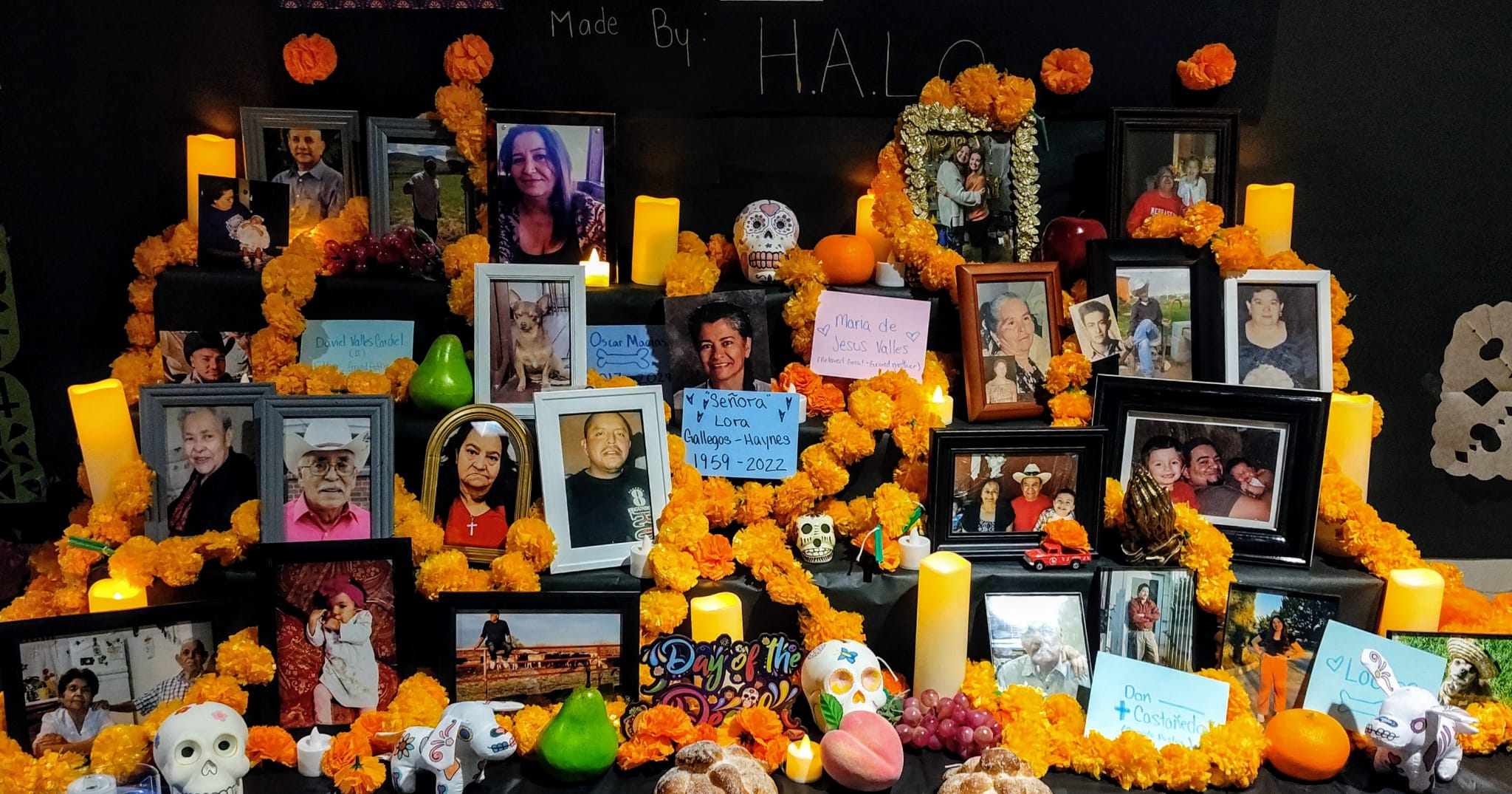
Día de los Muertos, or Day of the Dead, is a Hispanic/Latino tradition that honors and celebrates the lives of loved ones who have died. Some traditions observed during this holiday include setting up an altar and bringing offerings (ofrenda), such as photographs, favorite foods, personal items, candles, and colorful decorations, to celebrate the lives of those who are no longer with us. Another typical tradition is the use of marigold flowers and sharing memories and stories of their loved ones while eating candy sugar skulls and pan de muerto (bread).
HALO members created an altar for the campus community to provide a visual representation of what this holiday symbolizes.
“The altar is really important, but I feel like it’s more important to understand the purpose behind why we make an altar and its importance in Hispanic culture,” said Naomi Macias, a junior and Social Activities Chair for HALO.
She explained that students were encouraged to contribute meaningful items.
“Photographs of family members along with their favorite foods or personal items, like something related to a sport or instrument,” she said. “Along with candles and incense to attract them to the altar.”
Although Macias does not personally celebrate the holiday, she emphasized its cultural value on campus.
“It’s important in regard to understanding Hispanic culture because it’s a holiday that is used to celebrate our loved ones,” she said.
For many students, this event is an opportunity to create connections and a sense of belonging. Camila Garcia, a freshman and active member of HALO, said she joined the club knowing she wanted to find a community at FHSU.
“It has genuinely brought me closer to a lot of people in the club,” she said. “It really feels like a home away from home because everyone is so involved and it brought us so close together.”
Garcia also helped decorate the altar, adding the colorful skull imagery commonly associated with the tradition.
Club president Karina Vargas noted how this event reflects HALO’s mission to promote and celebrate Hispanic culture across campus.
“We keep the altar here on campus to promote Hispanic culture. There is a lot of foot traffic in this building, so we wanted to leave it up so people can walk by and see it,” she said.
The event also featured an informational display that explained the meaning behind Día de los Muertos and the altar.
HALO has experienced rapid growth under Vargas’ leadership — from 26 paid members last year to 65 this year — which was a primary goal for Vargas.
“Making it more of a community and trying to make it a home away from home where we are all like family to each other [was one of our goals],” she said.
Vargas also shared that she has a personal connection to the holiday.
“On October 27, I had an altar for my dog… and November 1 and 2 is when I have an altar for my loved ones.”
Ultimately, HALO’s purpose for this event is to have students learn and gain a sense of unity and cultural appreciation.
“I hope they get a family feeling from this,” Vargas said. “Some people celebrate this at home with their parents, so being able to give them somewhat of that feeling here away from home is really important.”
The altar will remain on display in Fischli-Wills, allowing students and visitors to honor and learn about this meaningful tradition throughout the week.