
By KELSEY WICK
Tiger Media Network
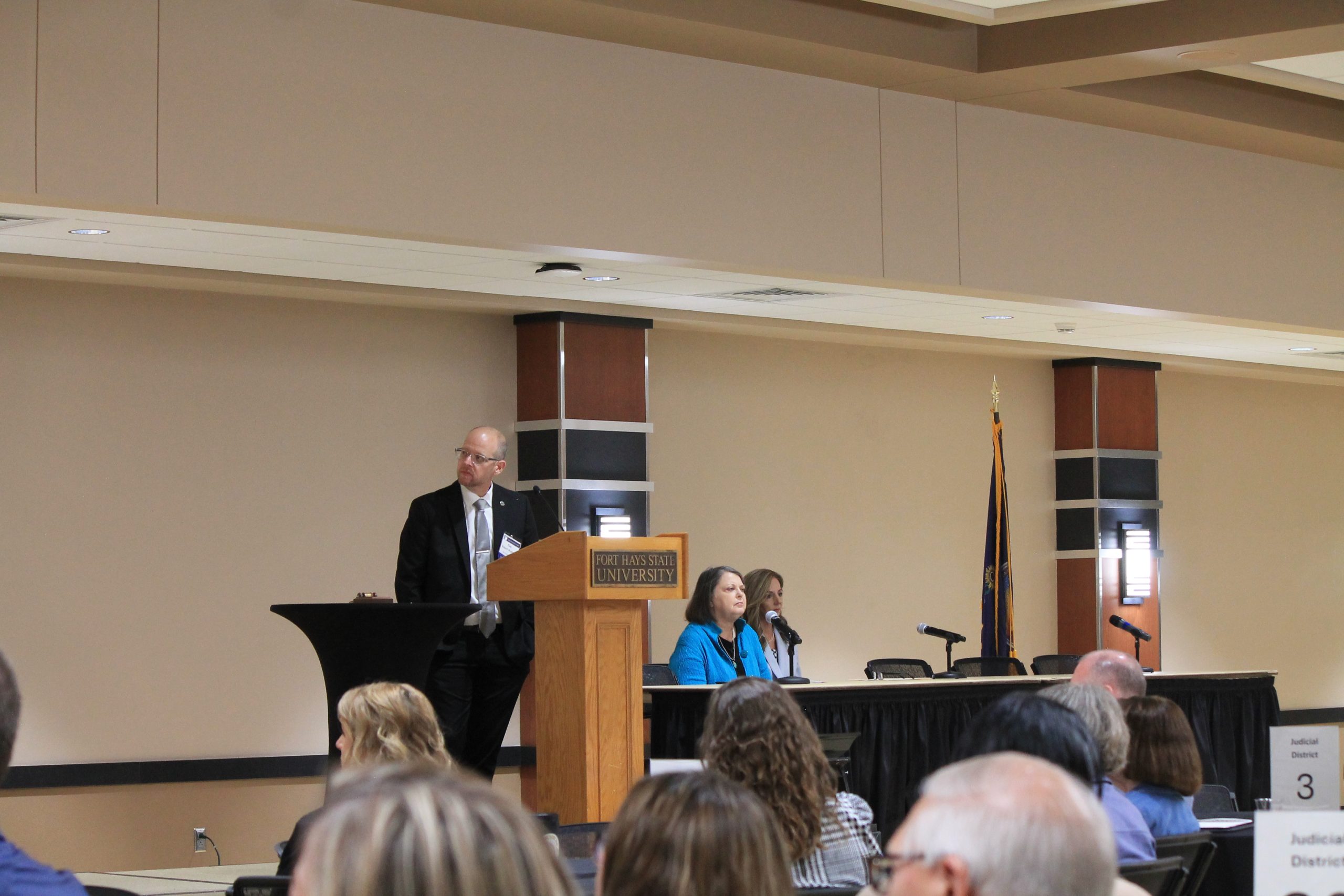
Leaders from across Kansas gathered virtually and in person last Tuesday for the 2025 Kansas Mental Health Summit, a two-day event designed to transform how courts and communities address behavioral health challenges. Hosted in collaboration with Fort Hays State University and state agencies, the summit brought together judges, lawmakers, clinicians, and advocates to confront the intersection of mental illness and the justice system.


The summit opened with a welcome from Judge Robert Wonnell of the 10th Judicial District, followed by performances from the Fort Hays Singers and ceremonial honors by the Kansas Army National Guard. While Governor Laura Kelly was absent due to illness, Chief Justice Marla Luckert and other state leaders emphasized the urgency of ending the criminalization of mental illness.
Judge Steven Leifman’s keynote, “Ending the Criminalization of Mental Illness,” laid bare the historical failures of the U.S. mental health system and proposed a blueprint for reform.
“Jail should be the last resort, not the first,” Leifman said.
Speakers with lived experience, including Tara Rollins and Amy Schmierbach, shared personal journeys that highlighted the human cost of systemic gaps. Dr. Benjamin Gilmer, author of The Other Dr. Gilmer, provided a clinical perspective on justice and perception, challenging attendees to reconsider how mental health is addressed in legal contexts.
Sessions throughout the summit tackled practical reforms, including Assisted Outpatient Treatment (AOT), presented by Amy Lukes of the Treatment Advocacy Center. Lukes emphasized the importance of civil court commitments in helping individuals adhere to treatment plans while preserving dignity and autonomy.
Audra Goldsmith of the Council of State Governments spotlighted Kansas’ participation in the national Stepping Up initiative, which uses jail data to reduce incarceration rates among people with behavioral health needs. A panel on Multi-Branch Communities of Practice (MBCOP) showcased cross-agency collaboration as a model for sustainable change.
Wednesday’s sessions focused on trauma-informed care and crisis intervention. Dr. Stephanie Covington explored the addiction-trauma connection, advocating for gender-responsive, evidence-based treatment. A panel moderated by Tim DeWeese, director of Johnson County Mental Health, outlined a continuum of crisis response strategies—from Mobile Crisis Teams to 988 Call Centers.
The summit concluded with an action planning session led by Patti Tobias, empowering districts to implement community-based reforms tailored to local needs.
With over a dozen CLE credits offered and hundreds of participants engaged, the 2025 Kansas Mental Health Summit marked a pivotal moment in the state’s commitment to behavioral health justice. As districts move forward with their action plans, the message is clear: collaboration, compassion, and data-driven solutions are the path to lasting change.